
Was that concert 5,000 people or 15,000? Ask three people and you will get three answers. Human crowd estimates routinely vary by 50 to 300%, and the political stakes around events make accuracy even harder to trust.
Crowd counting matters for safety, revenue, and compliance, yet it remains one of the hardest counting problems humans face. Our brains are remarkably poor at estimating large groups. AI crowd counting tools take a different approach: process a photo or video feed and return a number, the same number, every time. Here is how the technology works and where event managers are using it today.
Why human crowd estimates fail
The human brain is good at comparing quantities, like judging which supermarket queue is longest. It is genuinely bad at counting them. Cognitive scientists note that once a group exceeds about 4 people, we stop counting and start estimating. The larger the crowd, the worse those estimates get.
Full Fact's research into crowd counting found that large discrepancies between estimates are the norm, not the exception. At a 2023 London march, organizers reported 800,000 attendees while police estimated 300,000. A 2025 Sydney rally saw police counts of 90,000 against organizer claims of up to 300,000. Even experienced observers struggle to distinguish between two and four people per square meter, a difference that doubles the total count.
The traditional estimation method, the Jacobs Method from the 1960s, involves counting people in sample grid squares, calculating average density, and multiplying by total area. It is better than guessing, but still relies on assumptions about uniform crowd distribution that rarely hold in practice.
How AI crowd counting works
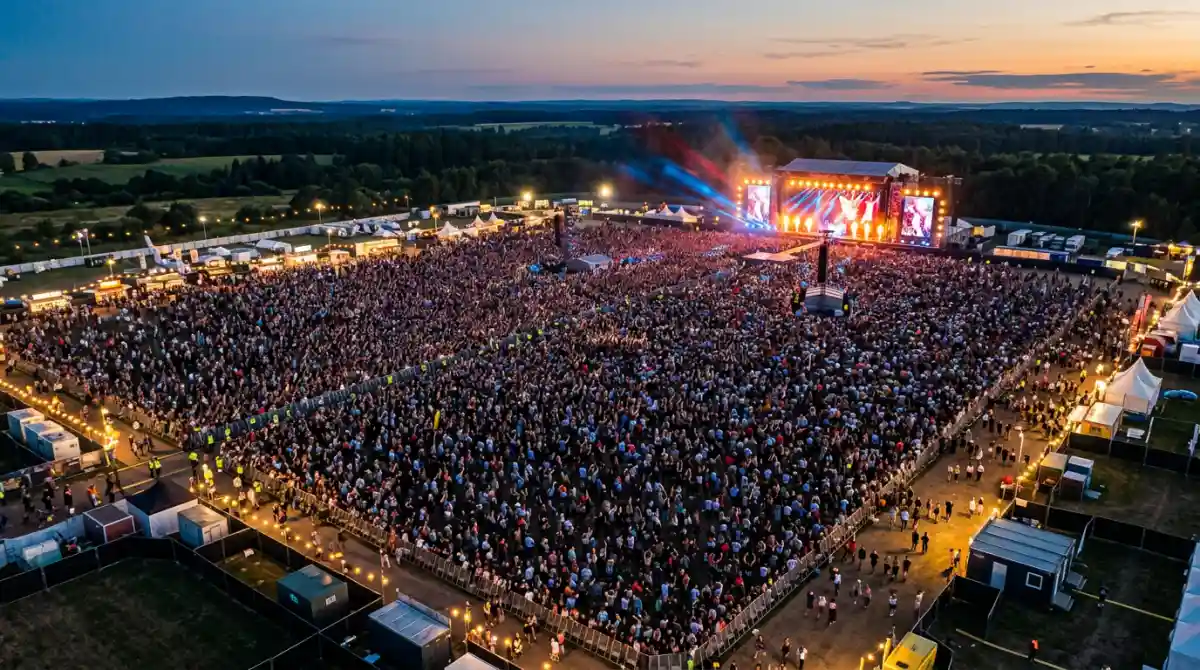
AI crowd counting uses computer vision to detect and count individual heads or bodies in an image. The process works in two main approaches.
Detection-based counting identifies each person individually, placing a marker on every detected head. This works well for crowds up to a few thousand, where individual people are still distinguishable in the image. It provides both a count and a visual map showing exactly who was counted.
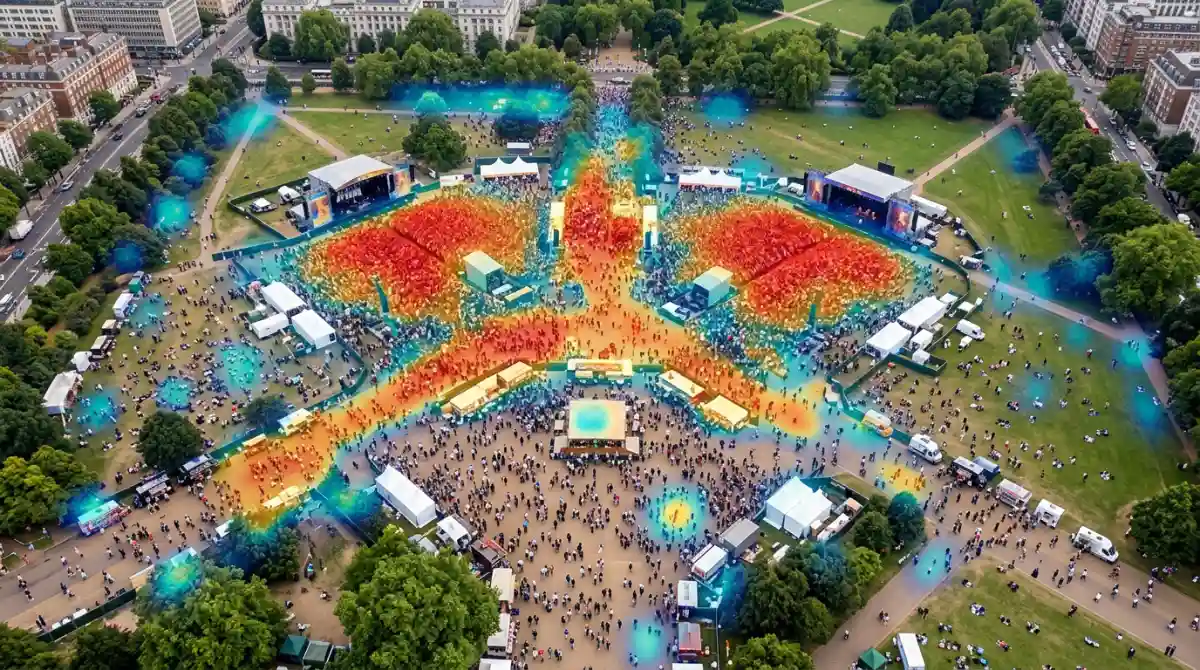
Density estimation handles much larger crowds by predicting how many people occupy each region of the image without identifying individuals. The model generates a density map, a heatmap where brighter areas indicate more people, and sums the values to produce a total. This approach scales to tens of thousands of people in a single frame.
Modern systems like SmartSport combine both approaches with large language models that generate actionable management reports. In benchmark testing, SmartSport achieved 93.8% counting accuracy for sports facility crowds, while domain experts rated its AI-generated management suggestions at 4.2 out of 5.0 for practicality.
Where event managers use crowd counting
Overcrowding has caused fatal incidents at venues worldwide. Real-time crowd density monitoring flags sections approaching capacity limits before they become dangerous.
Accurate attendance numbers feed into ticket reconciliation, concession planning, and sponsor reports. A 20% undercount means 20% less leverage in next year's sponsorship negotiations.
Stores and shopping centers use overhead cameras to count visitors by hour, measure dwell time, and evaluate promotional impact without manual tally counters.
Train stations, airports, and public squares use crowd counting to manage flow, adjust staffing, and trigger alerts when density exceeds safe thresholds.
Real-time vs. photo-based counting
Photo-based counting works from a single image. Upload a crowd photo, get a count. This is useful for after-the-fact analysis: how many people attended last night's concert, how crowded was the plaza at noon, how many showed up for the rally.
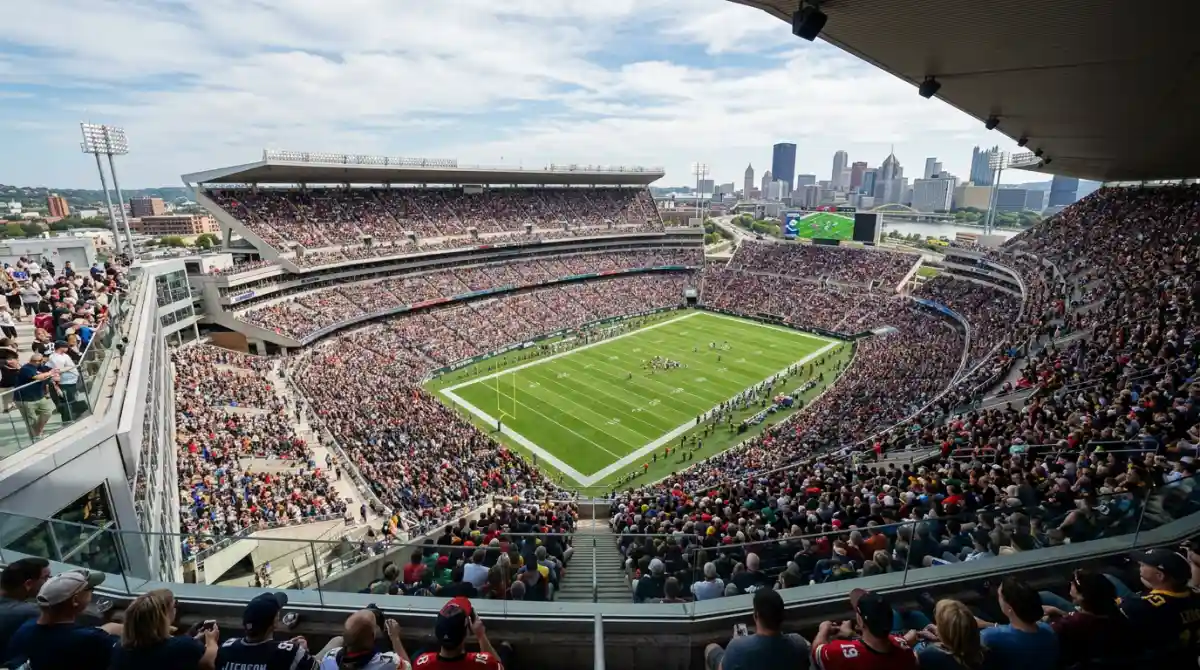
Real-time counting processes a continuous video feed. Cameras mounted at venue entrances or on overhead gantries count people as they enter and exit, maintaining a running total. Systems like ArenaIQ (2026) combine real-time density monitoring with predictive models that forecast queue surges and staffing needs across stadium sections.
The choice depends on the use case. Event post-mortems and insurance claims need photo-based analysis. Safety compliance and live operations need real-time feeds.
Privacy and ethical considerations
Crowd counting raises legitimate privacy questions. The good news: most counting systems do not need to identify individuals. Detection-based models count heads without recognizing faces, and density estimation works entirely on aggregate patterns.
Best practice is to process images on-device or on secured servers, retain only the count and density map rather than the original footage, and clearly communicate monitoring practices to attendees. When counting is used for safety, the case for it is straightforward. When used for surveillance or protest documentation, the ethical calculus changes significantly.
The bottom line
Human crowd estimates are unreliable by nature. AI crowd counting provides consistent, repeatable numbers that do not shift based on who is doing the estimating or what they want the answer to be. The technology has matured from academic research into practical tools that event managers, safety teams, and facility operators use daily.
The next time you need an attendance number, skip the guessing. A single overhead photo and an AI counting tool will give you an answer you can defend, every time.