
A finished solar farm looks calm from the fence line: straight rows, blue glass, clean gravel roads. On the project manager's screen, it is a live inventory problem. Are all modules installed? Which row is missing a panel? Does the handoff photo match the bill of materials?
Solar panel counting is the practical answer. The IEA reported around 700 GW of renewable capacity additions in 2024, and solar PV made up more than three-quarters of that growth. When sites expand that quickly, manual row walks and spreadsheet marks do not keep up. A drone photo plus AI counting gives crews a repeatable way to turn a field image into a module count, a progress check, and a record they can share.
Why panel counts drift
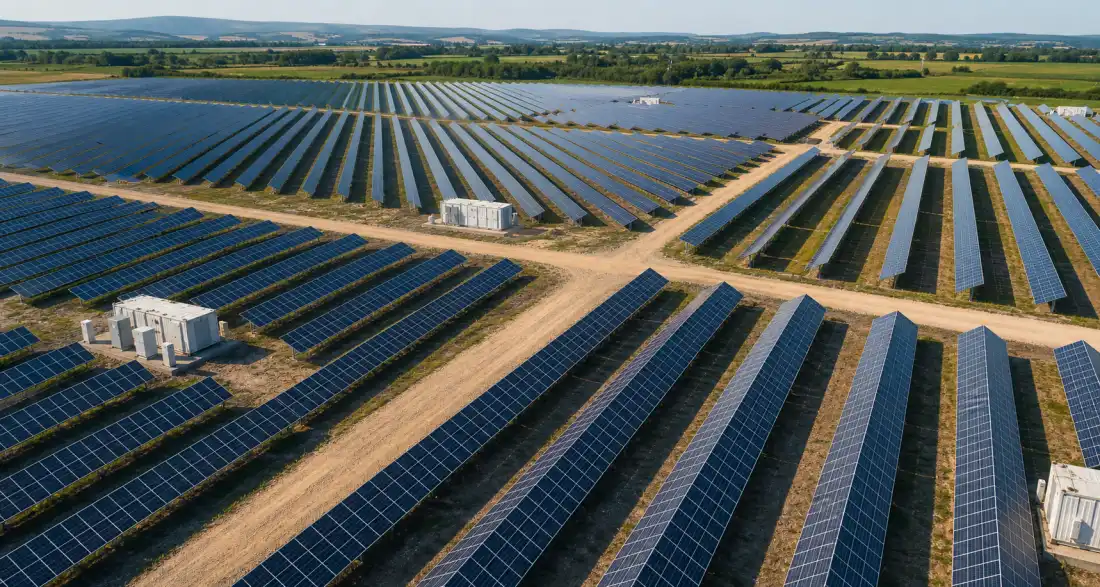
PV modules are designed to look identical. That is good for power generation and bad for manual counting. A 10 MW site can have tens of thousands of rectangles arranged in strings that bend around roads, inverters, drainage lines, and terrain. From the ground, one missing module hides behind perspective. From a spreadsheet, one skipped row hides behind a copied number. The drift usually appears during construction reporting, commissioning, and operations, exactly when teams need a number they can trust.
The drone-to-count workflow
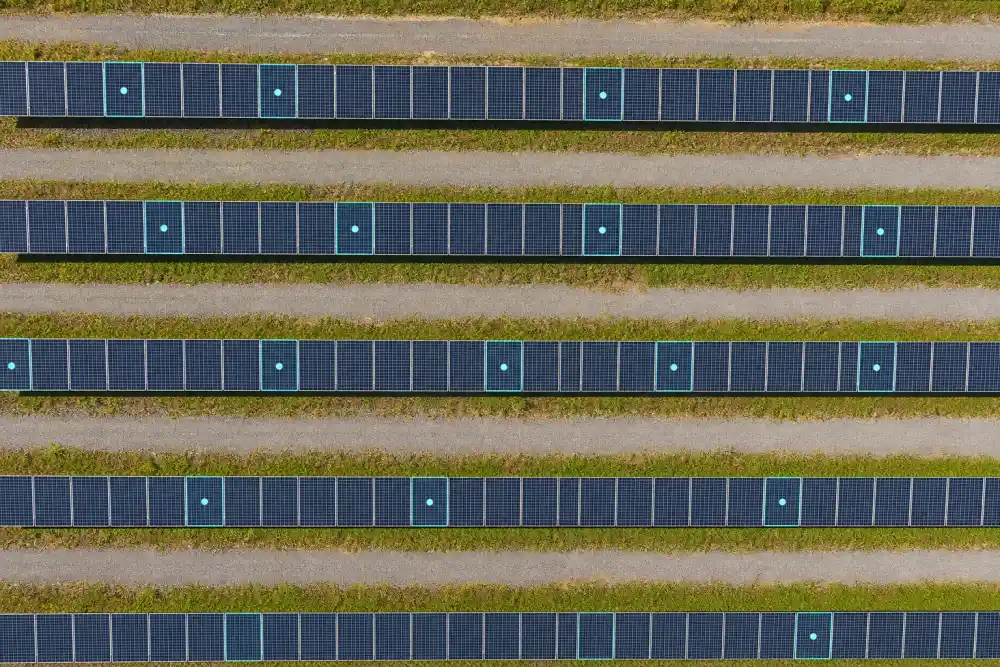
The workflow is simpler than a full inspection program. Fly one block with a consistent grid path. Use an orthomosaic or sharp overlapping images. Let the model detect individual panel rectangles. Group detections by row, string, or inverter block. Review the misses and false positives, then export the count with the marked source image. The goal is not a magic number. The goal is a count that a field lead can verify without walking every aisle.
Field checklist
- Fly close enough that each module edge is crisp, not a dark line.
- Keep the camera as close to straight down as the site allows.
- Avoid strong glare; early or late light often keeps panel edges easier to see.
- Capture full rows with overlap so edge panels are not lost at image borders.
- Count by blocks first, then roll block totals into the site total.
Where AI earns its keep
AI does not replace solar engineers. It removes the part of the job where a person scrolls across the same pattern for 45 minutes hoping not to lose their place. That matters most when the count has to support a decision, not just fill a report.
Compare completed rows with contract milestones before a crew leaves the site, and catch missing modules while equipment is still nearby.
Match the installed count against the design package and flag gaps before the owner signs off on the block.
Recount after repair work, storms, or vegetation clearing without sending people through every row.
Counting is a gateway to inspection
The useful part is not only the total. Once each module has a detection marker, every panel has a location in the photo. That creates a base layer for defect review, thermal checks, vegetation issues, and cleaning routes. A computer vision study extracted 107,842 PV modules from seven plants, built 4.3 million infrared module images, and classified 10 common anomalies with more than 90% test accuracy. Counting is the first step toward that richer inspection map.
The bottom line
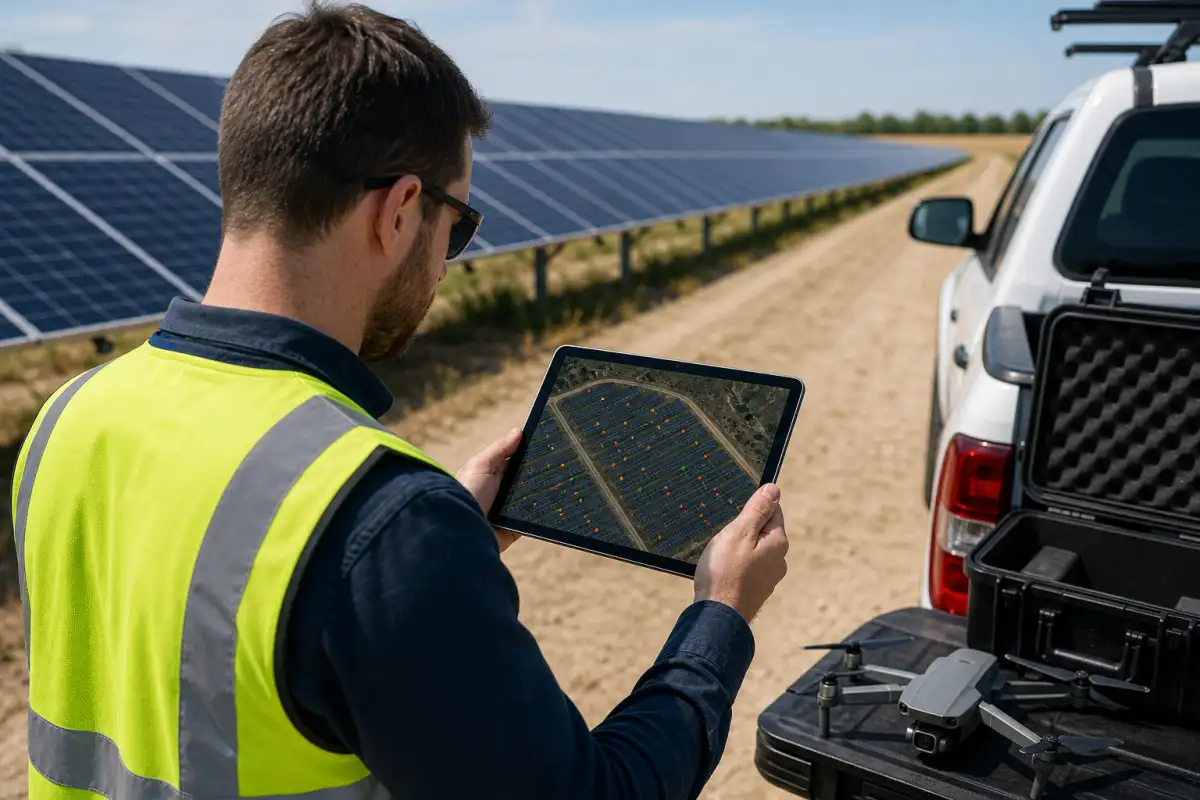
Solar farms are built from repeated parts, which makes them ideal for AI counting. The model does the patient scanning. The human checks the edge cases and decides what the number means. The best results come from that pairing: a clear drone image, a fast first count, and a short review of the marked panels.
On the next drone flight, choose one block and count it from the image before anyone walks the rows. If the photo is sharp enough to show every module edge, it is probably sharp enough to turn into a reliable count.