
A bin of 300 washers looks harmless until someone needs exactly 48 before lunch.
Counting small parts with AI is built for that moment. Screws, bolts, bearings, washers, terminals, clips, and O-rings are cheap one by one, but a wrong count can stop a kit, delay a repair, or send a customer the wrong pack size. ABB's Value of Reliability survey found that more than two-thirds of industrial businesses face unplanned outages at least once a month, with a typical cost close to 125,000 dollars per hour. A missing fastener is not always the cause, but the lesson is clear: small parts deserve better counting than a tired thumb and a paper cup.
Why small parts break manual counts
Manual counting works when the quantity is low and the parts are easy to separate. It gets messy when the same part is tiny, shiny, and repeated hundreds of times. Your eye loses its place. Your finger nudges a washer into the wrong pile. Someone asks a question halfway through, and the count restarts from zero.
Counting scales help, but they are not magic. They work by dividing total weight by the known weight of one part. That fails when mixed parts sneak into the bin, when oil or packaging changes the weight, or when the part is so light that small vibration shifts the result. A recent paper on automated counting of stacked industrial objects notes the same problem from another angle: some manufactured parts are too light to count reliably by weight, while others are too heavy to move onto a scale safely.
How photo-based part counting works
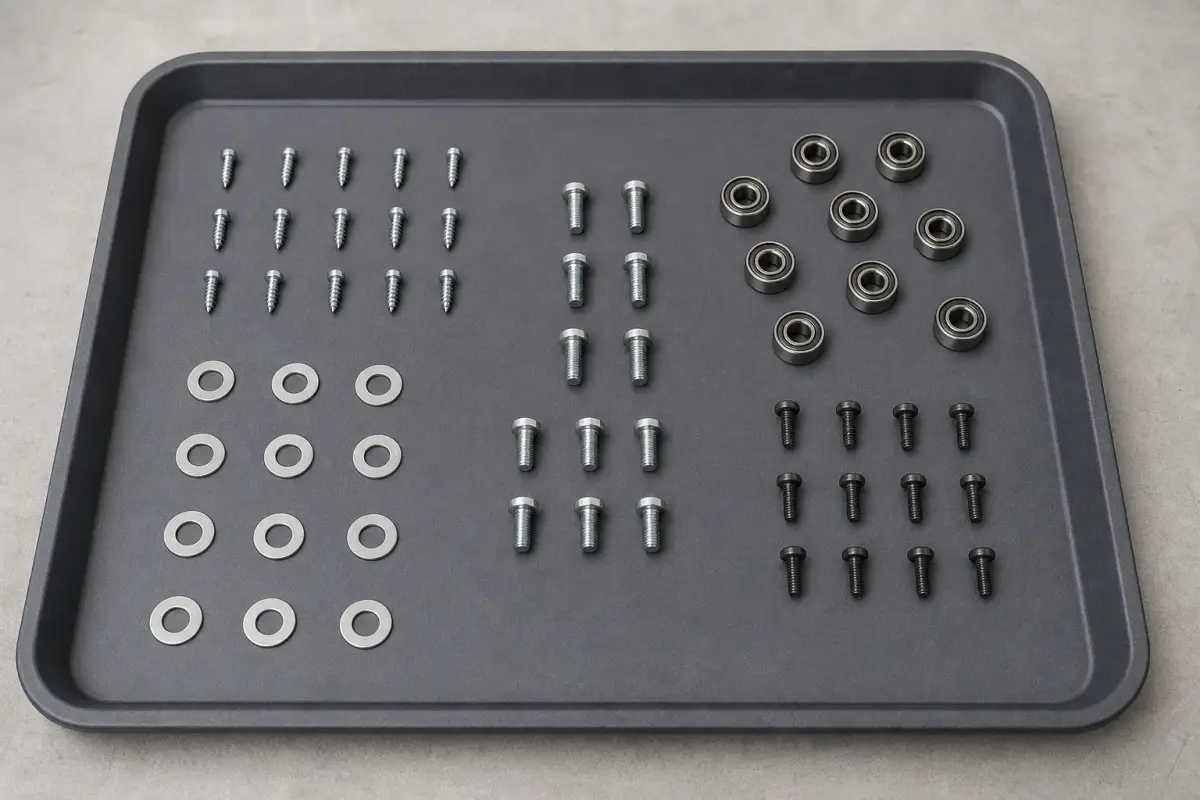
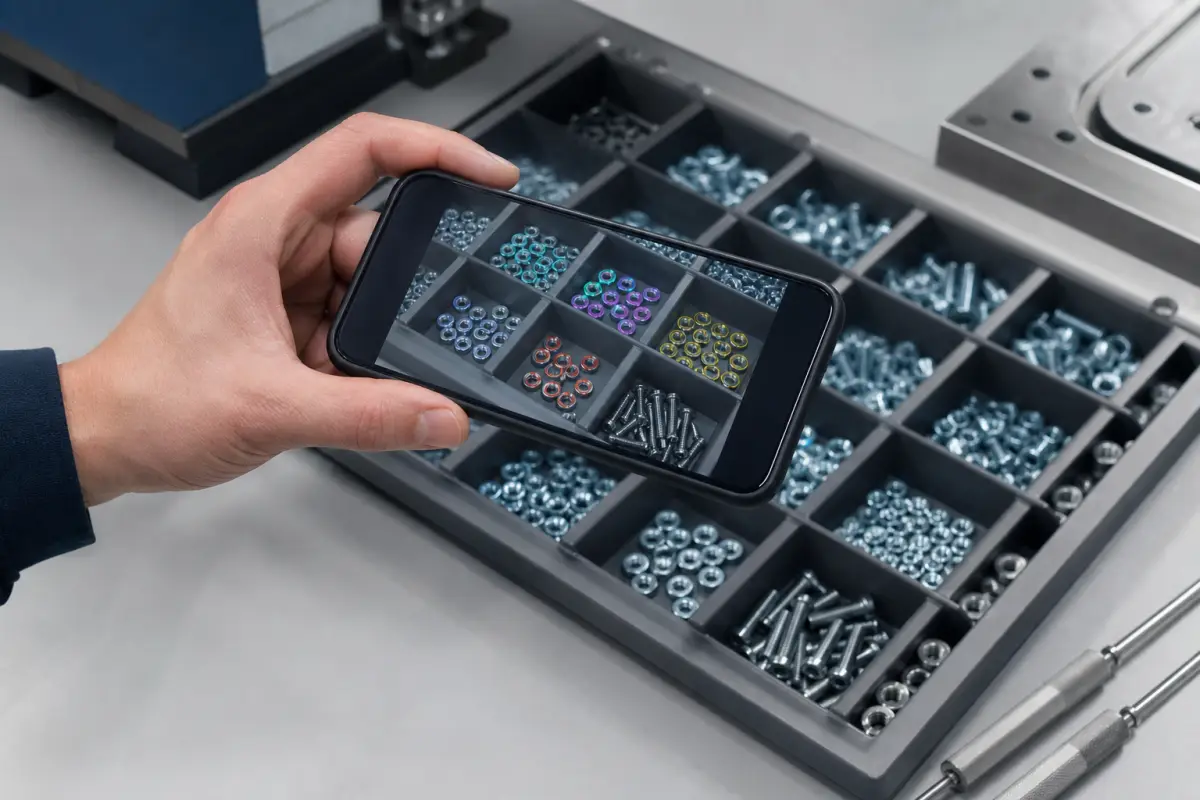
The practical workflow is simple: spread one part type in a single layer, take a clear overhead photo, let the AI mark each visible item, then review the overlay. Think of the overlay as a second pair of eyes that never loses its place. If one screw sits in a shadow, you can catch it before the count is saved.
Modern vision models are already good at this kind of shape recognition. In a machine-vision study on mechanical component identification, researchers reported 98 percent accuracy when identifying bolts from visual features such as dimensions and pitch. The goal in a daily operations workflow is narrower: not to understand every thread detail, but to find every visible object of the chosen type and return a count you can verify.
Best jobs for AI small-part counting
Check that each assembly kit has 12 washers, 8 bolts, and 4 clips before it reaches the line.
Verify supplier bags and trays when the label says 500 pieces but the count looks light.
Spot low stock in bins of bearings, fuses, terminals, and O-rings before a technician needs one.
Confirm that customer packs contain the promised quantity before sealing the bag or box.
Set up the photo like a counting station
- Use one part type per photoMixing M3 washers with M4 washers makes the job harder than it needs to be.
- Create contrastPut silver screws on a dark mat, black clips on a light tray, and clear parts on a colored surface.
- Spread parts in one layerAI can count what it can see. A pile hides items under items.
- Shoot straight downAn overhead angle keeps every part the same apparent size and reduces perspective distortion.
- Remove glareShiny metal creates bright spots that look like missing edges. Use diffused light instead of direct flash.
- Keep the count range sensibleFor very dense quantities, count batches of 50 to 200 and combine the totals.
Where scales and AI disagree
The best workflow is often hybrid. Use the scale when parts are sealed in a bag, hidden in a deep bin, or too small to separate quickly. Use AI when visual proof matters, when part mix-ups are possible, or when you need to verify an exact tray before handoff.
For example, a scale may say a bag contains 100 screws. A photo can show that 96 are screws and 4 are washers. The scale found mass. The AI found objects. In manufacturing, those are not the same question.
Limits worth respecting
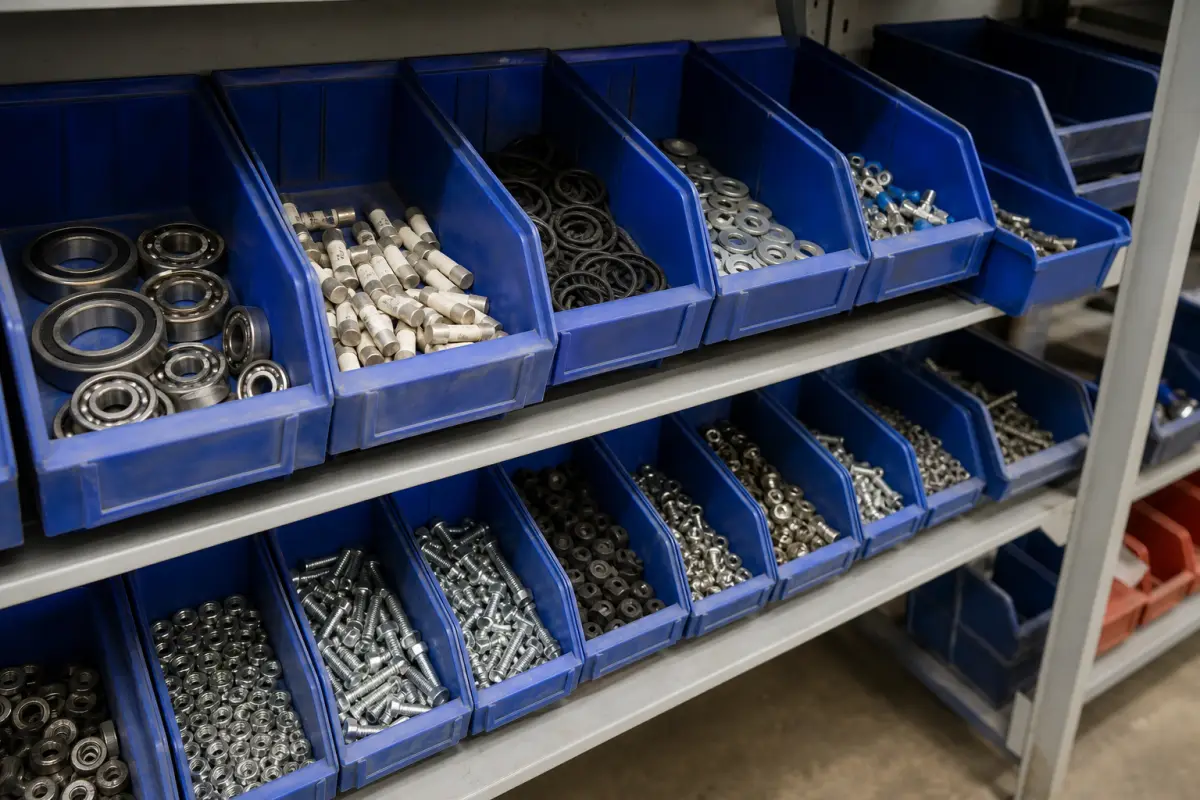
AI counting is strongest when objects are visible, separated, and visually consistent. It struggles when parts overlap heavily, when transparent bags hide edges, or when several similar sizes are mixed together. That does not make the tool weak. It just means the photo setup matters.
- Do not expect a perfect count from a deep, crowded bin where half the parts are hidden.
- Do not use one photo for several visually similar SKUs unless you only need the total object count.
- Do not trust a blurry image of shiny metal under harsh overhead lights.
- Do use the overlay as a verification step, especially for customer shipments or safety-critical maintenance parts.
The bottom line
Small-part counting is not glamorous, but it is exactly the kind of repetitive task where AI counting earns its keep. It turns a tray of hardware into a documented count, gives you a visual record, and catches mistakes that weight-based methods can miss.
Next time you need to count a bin of screws, spread 100 on a contrasting tray, snap a photo, and compare the AI result with your manual count. The fastest improvement may be the simplest one: stop counting invisible piles, and start counting clear photos.