
A seed lab counts 400 samples a day, 100 seeds each. That is 40,000 seeds counted by hand. AI does a tray in seconds.
Seed counting and germination testing are daily bottlenecks in breeding programs, quality control labs, and commercial nurseries. International seed testing standards require precise counts of 400 seeds per sample for germination tests, and breeding programs process thousands of samples per season. Manual counting is the standard, and it is exactly as tedious as it sounds. AI photo analysis now handles the same task in a fraction of the time, with accuracy above 95%.
The manual counting bottleneck
Manual seed counting is slow, repetitive, and surprisingly error-prone for something that seems simple.
A standard germination test requires counting 400 seeds into groups of 100, placing them on moist substrate, and monitoring daily for sprouts. A seed quality lab processing 200 to 400 samples per day handles 80,000 to 160,000 individual seeds - every one counted by hand. Breeding programs are even more demanding: evaluating thousands of cross-pollination results per season, each requiring precise seed counts for yield calculations.
The errors are not dramatic but they accumulate. A technician counting seeds of similar color on a white tray loses accuracy after the first hour. Small seeds like lettuce or tobacco are hard to distinguish from debris. And germination monitoring - checking trays daily to record which seeds have sprouted - multiplies the observation burden across every sample over 7 to 14 days.
How AI seed counting works
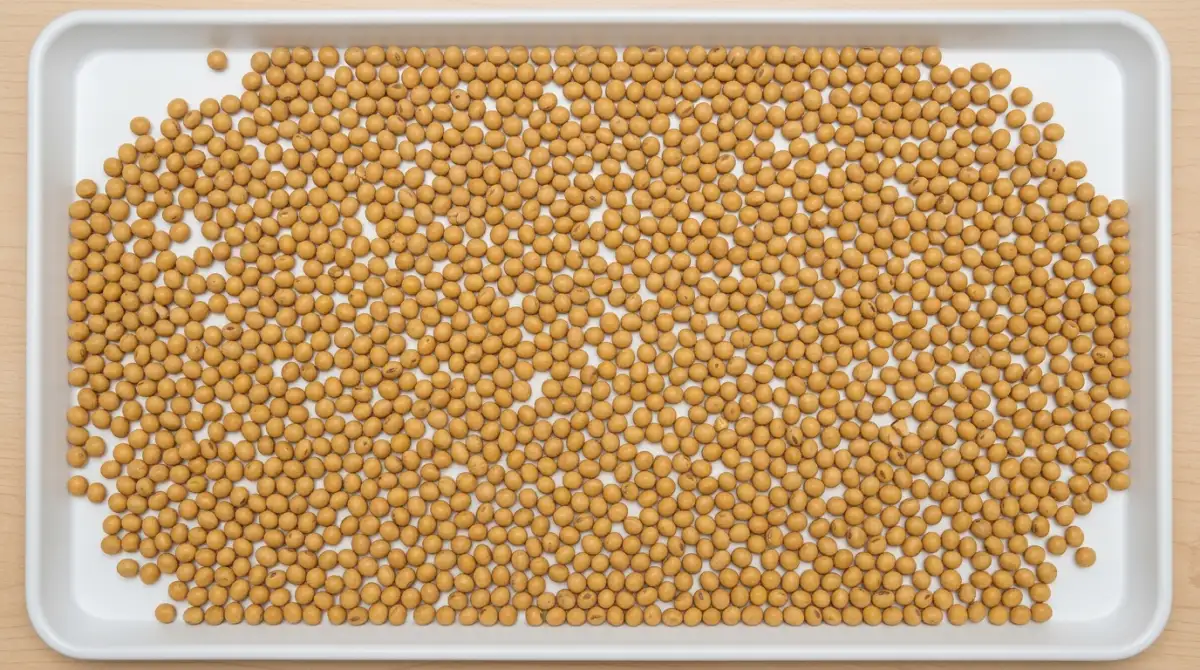
The workflow is straightforward: spread seeds on a contrasting surface, photograph from above, and let the AI detect and count each individual seed.
Image processing methods work by detecting seed-shaped objects against the background, separating touching seeds through watershed algorithms, and returning a total count. Deep learning approaches go further: they learn to distinguish seeds from debris, handle partial overlaps, and identify seeds of different sizes within the same image. The SoyCountNet framework (2026) achieves a mean absolute error of 4.61 and an R-squared of 0.94 for soybean seeds in field conditions.
Processing speed is where the advantage is clearest. Deep learning models count a tray of seeds in as little as 0.33 seconds per image. Even with image capture and upload time, the full workflow takes under 10 seconds per sample - compared to several minutes by hand.
Germination monitoring with AI
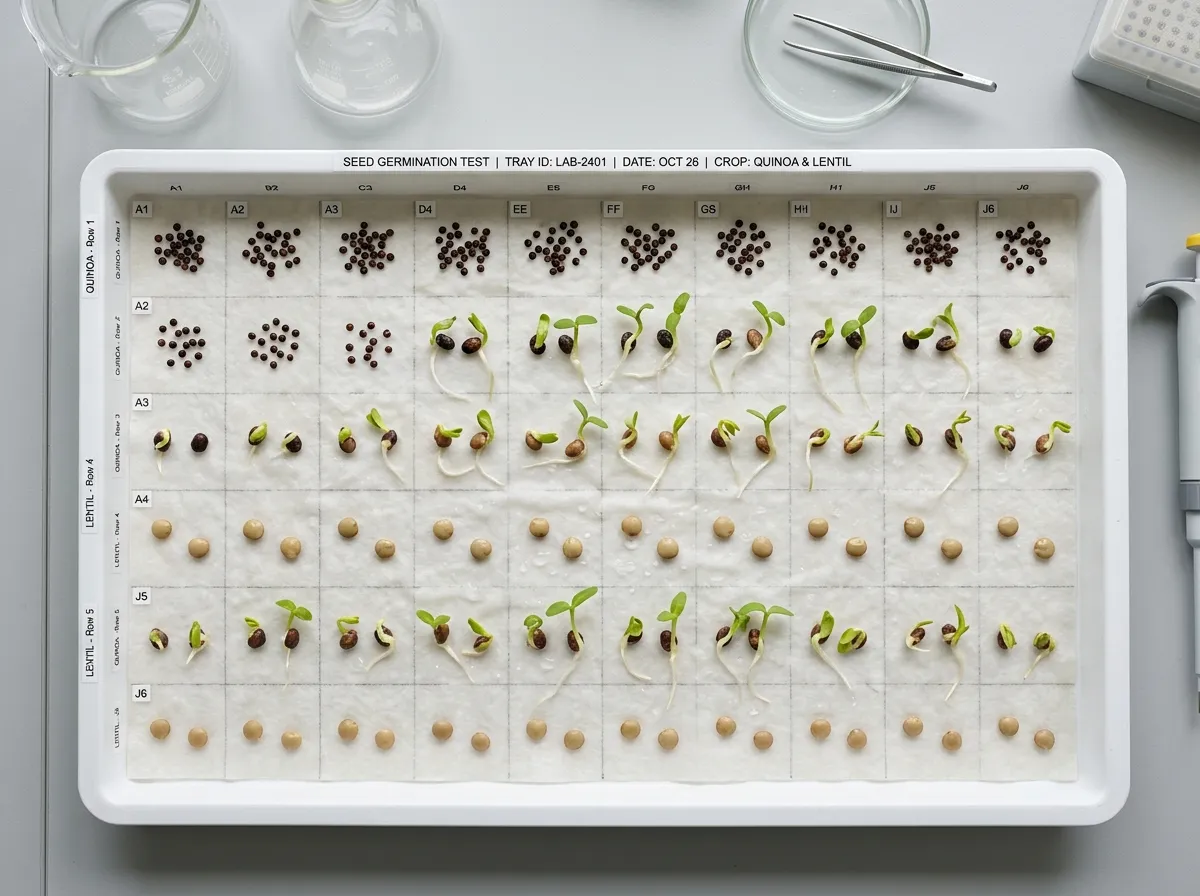
Counting seeds is only half the job. Germination testing requires daily observation of which seeds have sprouted and which have not. AI automates this too.
The SeedRuler platform (2025) combines traditional image processing with YOLOv5 deep learning detection to assess rice seed germination from photographs. It achieves a mean average precision of 95.5% and processes a germination tray in under 30 seconds. The system classifies seeds as germinated or ungerminated based on visible radicle emergence, then calculates the germination rate automatically.
Time-lapse setups take this further: a fixed camera photographs each tray at scheduled intervals, and the AI tracks germination progress over days without any human observation. The lab technician sets up the trays, starts the camera, and reviews results at the end.
Count 400 seeds by hand. Place on substrate. Check each tray daily for 7 to 14 days. Record sprouted vs. unsprouted. Calculate rate. One technician handles 30 to 50 trays per day.
Photograph tray. AI counts total seeds and classifies germinated vs. ungerminated. Germination rate calculated in seconds. Time-lapse mode monitors automatically.
Crops and seed types
AI seed counting works best with well-separated seeds on a contrasting background. The accuracy varies by seed type.
- Large seeds (corn, soybeans, beans): 97 to 99% accuracy. Easy to separate and detect
- Medium seeds (rice, wheat, sunflower): 95 to 97% accuracy. The SeedRuler platform was built specifically for rice
- Small seeds (lettuce, carrot, tobacco): 90 to 95% accuracy. Requires higher-resolution photos and careful separation
- Very small seeds (petunia, begonia): challenging. Seeds may be smaller than individual pixels at phone camera resolution
Seedling counting in the field
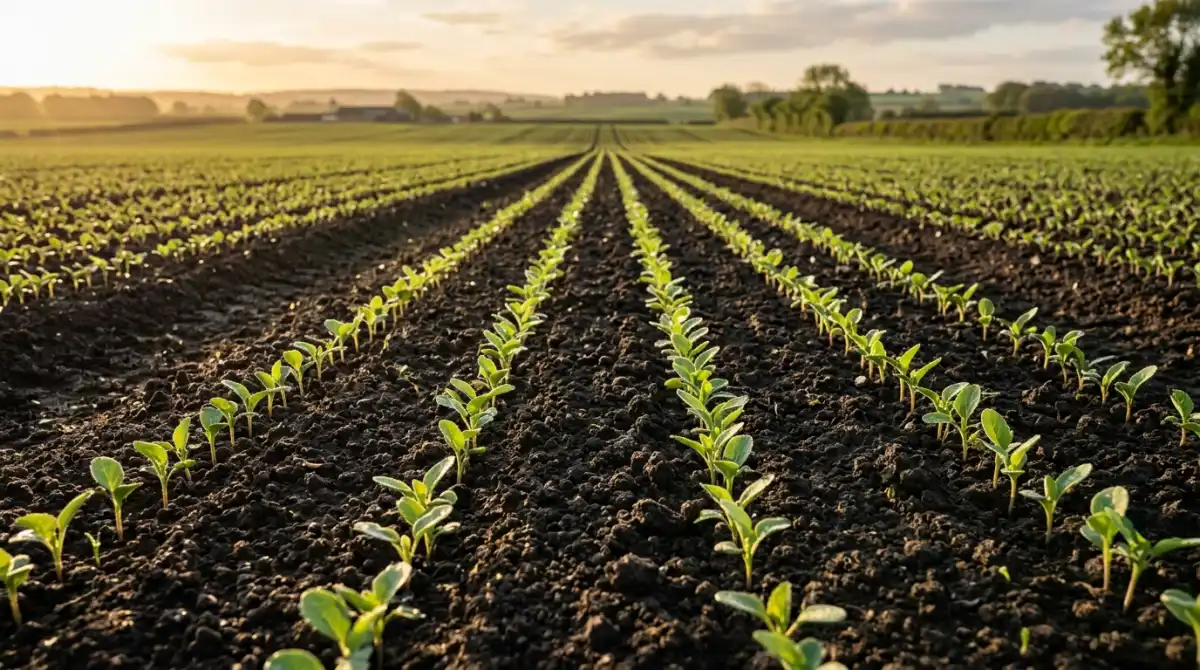
Beyond the lab, AI also counts emerged seedlings in the field. Drone or ground-level photos of crop rows detect individual seedlings, calculate stand counts, and identify gaps where seeds failed to germinate. This data helps farmers decide whether to replant thin spots, adjust seeding rates for the next season, or investigate soil or pest problems in specific areas.
The combination of lab seed counting and field seedling detection creates a complete picture: how many seeds were planted, how many germinated in the lab test, and how many actually emerged in the field. That data loop drives better decisions at every stage.
The bottom line
Seed counting and germination testing have been manual tasks since agriculture began. AI photo analysis does not change what needs to be measured - it changes how long it takes. Under 10 seconds per sample instead of several minutes. Over 95% accuracy for most crop seeds. Automated germination tracking that runs while the lab is closed.
The next time a tray of 400 seeds needs counting, try photographing it first. The count will be ready before you find a comfortable position to start counting by hand.