
Your herd does not line up and wait to be counted. But a drone does not need them to.
Counting livestock has been a physical, time-consuming job for as long as ranching has existed. Walk the pastures, check the fencelines, count through gates, squint at distant dots on a hillside. On a 1,000-head operation, manual counting consumes 8 to 12 labor hours every week - and the result is still an estimate. Drone-based AI counting is turning a full day's work into a 20-minute flight.
The old way: walking, guessing, recounting
Traditional herd counting means boots on the ground. Ranchers on horseback or ATV ride through pastures, tallying animals as they go. On open terrain, this works reasonably well. On rough ground with brush, trees, and rolling hills, animals scatter and hide. You count 487 in the morning and 502 in the afternoon, and both numbers might be wrong.
The problems compound with scale. Larger operations run cattle across thousands of acres of mixed terrain. Counting through gates works for moves and shipments, but not for daily wellness checks or inventory verification. Animals that stray, calve in brush, or simply stand behind a tree become invisible to a person at ground level.
How drone and AI counting works
The workflow has five steps: plan, fly, capture, detect, report.
First, you set a flight plan. Most consumer drones support automated grid-pattern flights that cover a defined area at a fixed altitude. A typical pasture survey flies at 30 to 60 meters above ground, capturing high-resolution images every few seconds.
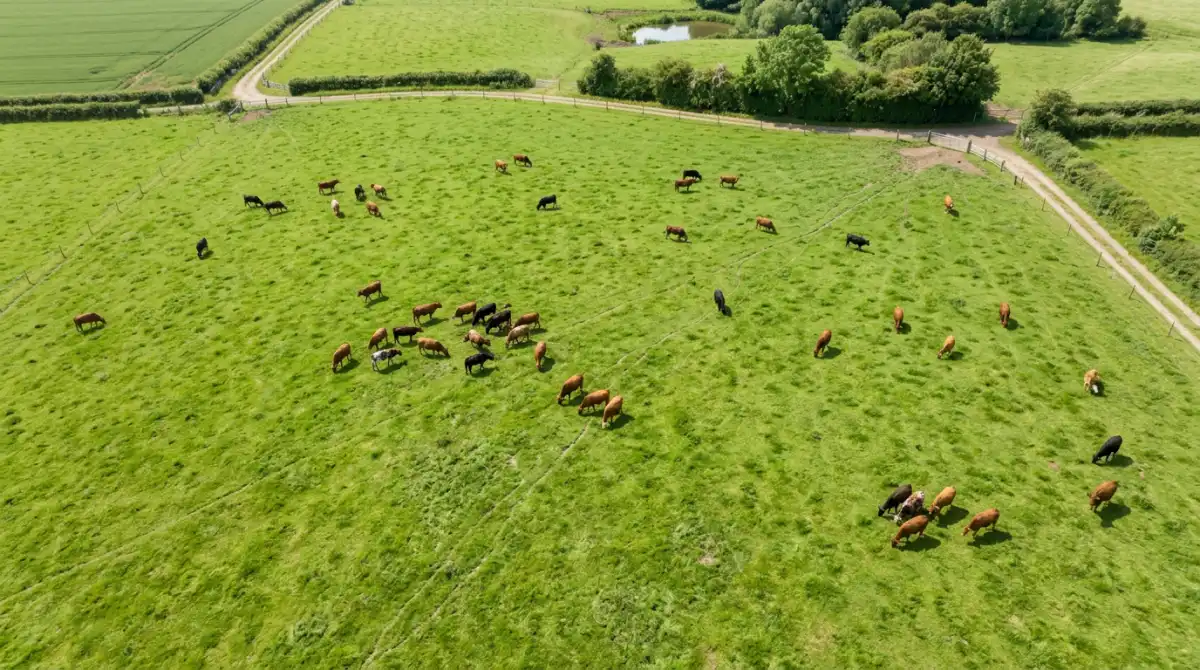
The drone captures overlapping photos as it follows the grid. These images are fed to an AI detection model that identifies individual animals by shape, size, and color. Each detected animal gets a marker, and the system produces a total count plus a visual map showing exactly where each animal was found.
CattleQuants, a leading drone-based counting service, reports that a typical pasture inspection takes 15 to 20 minutes of flight time and produces results within minutes of landing. The entire process - from takeoff to verified count - can be completed in under an hour for most operations.
Accuracy: what the data shows
Drone-based AI counting achieves 90 to 99% accuracy depending on conditions. CattleQuants reports 99% accuracy in feedyard inspections where animals are in open pens, and 90 to 99% in pasture settings where vegetation and terrain create more complexity.
A New Zealand study found that advanced systems achieve 97% accuracy on first analysis, reaching 99.9% after human review of flagged detections. The AI catches animals that human observers miss - behind bushes, in tree shadows, or in dips in the terrain. Research published in Nature found that combining thermal and RGB imagery improves detection of hidden animals from 15% to 85% for species camouflaged against their background.
The global livestock monitoring market was valued at $4.4 billion in 2024 and is projected to reach $8.5 billion by 2030, growing at 11.8% annually. The accuracy improvements are driving adoption across operations of all sizes.
In field tests, AI detection consistently identifies 2 to 5% more animals than human observers counting the same images. The animals are not hidden from the camera - they are hidden from human attention.
Beyond counting: what else the drone sees
Once you have a drone in the air, counting is just the starting point. The same images and AI models can support a range of additional tasks.
Identify animals that have moved outside their designated pasture or crossed a fenceline, before they get miles away.
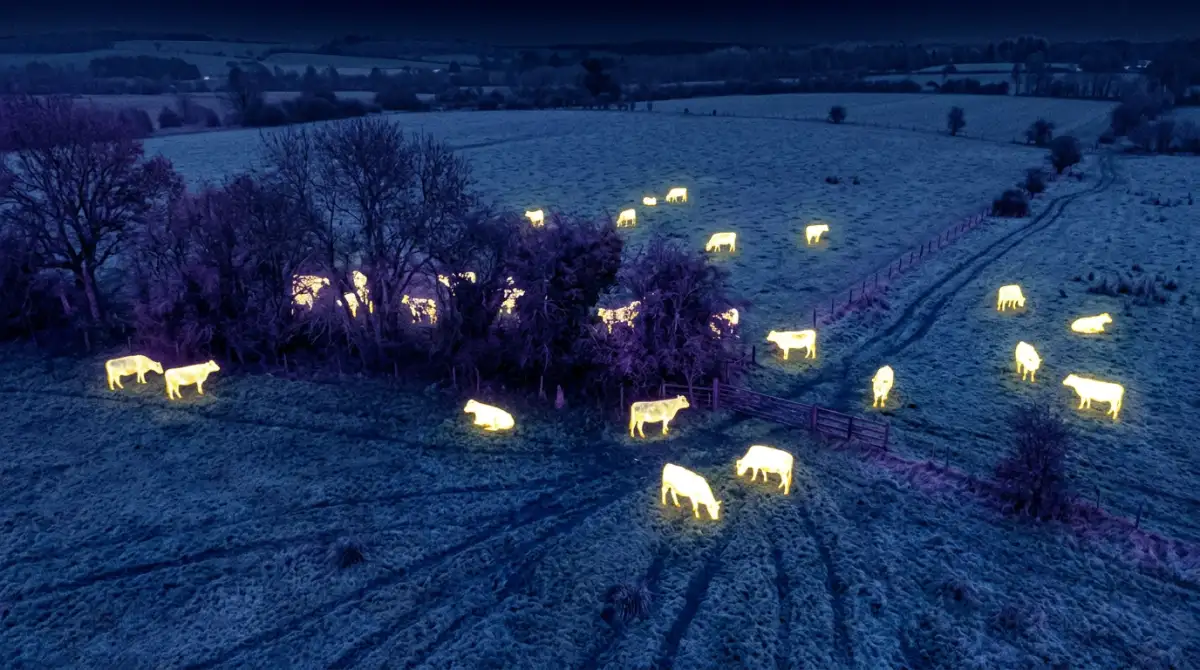
Thermal cameras detect elevated body temperatures that may indicate illness, injury, or heat stress. Early detection means earlier treatment.
Spot cows that have separated from the herd to calve, reducing calf loss by finding pairs early.
Aerial images reveal grazing patterns, overused areas, and water source conditions - useful data for rotation planning.
Equipment you need
You do not need military-grade hardware. A consumer drone with a good RGB camera is enough for most counting tasks.
- Drone: Any model with 20-minute or longer flight time, GPS waypoint navigation, and a 12MP or higher camera. Popular choices include the DJI Mini series for small operations and the DJI Mavic or Air series for larger ranches.
- Thermal camera (optional): Adds heat-signature detection for finding animals in dense brush, shade, or low-light conditions. Useful but not required for basic counting.
- Counting software: AI detection models that process the captured images and return counts. Some services like CattleQuants offer end-to-end solutions; photo-based counting apps can also process individual aerial images.
- Flight planning app: Most drone manufacturers include grid-flight planning in their apps. DJI Fly and Litchi are common options.
Limitations to know
Drone counting is powerful but not perfect. Dense forest canopy blocks the camera entirely. Night conditions require thermal cameras, which have lower resolution than RGB sensors. Very large herds spread across thousands of acres may need multiple flights, and wind or rain can ground operations.
Clustered animals remain a challenge for AI: tightly packed cattle in a feedyard corner may be undercounted when individual outlines merge. Research from MDPI Sensors confirms that clustered animals and varying background contrast are the two hardest problems for current detection models.
The bottom line
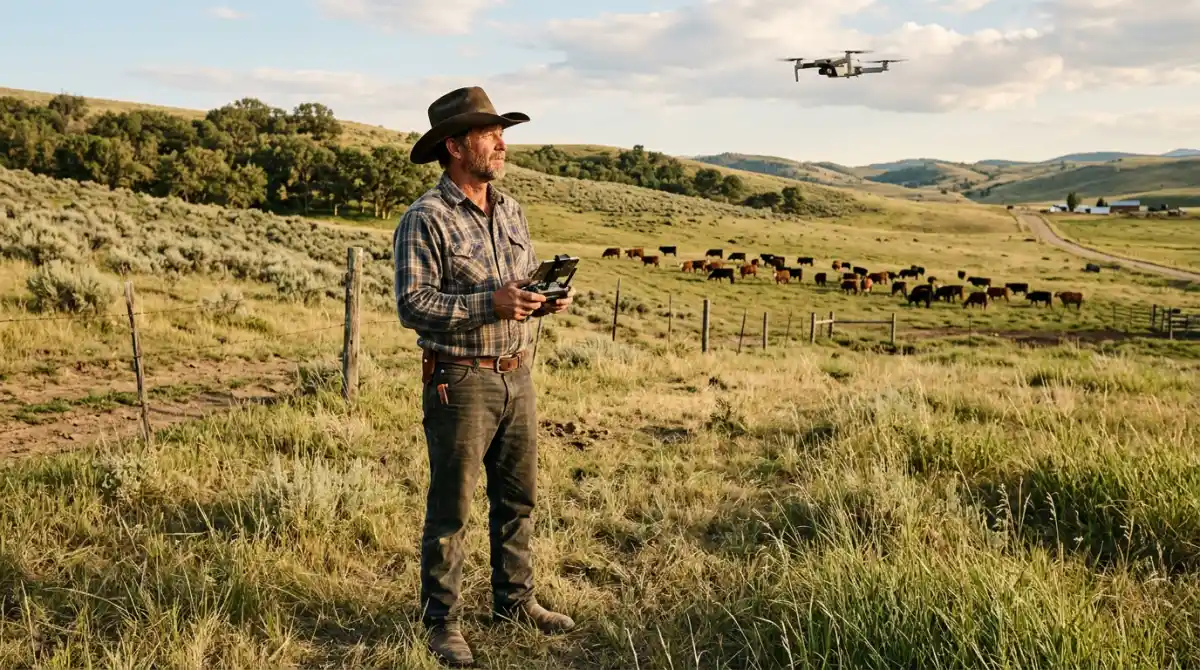
Ranchers have spent generations counting livestock the hard way. A consumer drone and an AI counting model now accomplish the same task in a fraction of the time, with better accuracy and a permanent visual record of every count.
The next time you need a head count, send the drone up instead of saddling a horse. Your count will be ready before you finish your coffee - and it will probably be more accurate than any tally you have done on foot.