
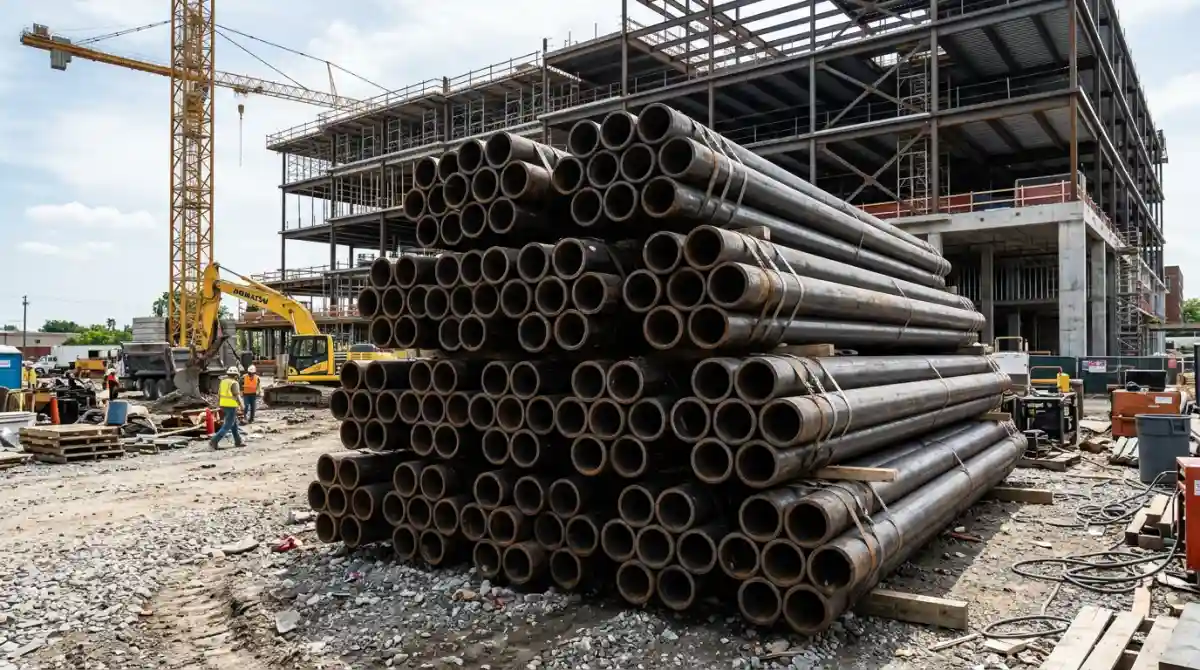
A delivery truck just dropped 2,000 pipes on a construction site. Your foreman says it looks about right. The AI says it is 1,847. That gap is the difference between a smooth project and a week-long delay waiting for replacement materials.
Construction material counting is a daily necessity that most teams handle the same way they did decades ago: walk up to the pile, start counting, lose track, start over. It happens in rain, dust, and fading daylight. The stakes are high because miscounts lead to over-ordering, under-ordering, or disputed deliveries. AI-powered photo counting offers a faster, more accurate alternative for pipes, rebar, bricks, and dozens of other materials.
The job-site counting problem
Construction sites are hostile environments for accurate counting. Materials are scattered across large areas, stacked in irregular piles, and often covered in mud or dust. Rebar bundles overlap. Pipe stacks shift during transport. Bricks arrive on pallets but get spread across the site as work progresses.
Manual counting is slow and inconsistent. Studies show that the average manual material takeoff is off by 7 to 10%, and those errors compound across a project. Over-order by 10% and you waste budget on materials that sit unused. Under-order by 10% and your crew stands idle while waiting for a new delivery.
Receiving verification is especially painful. When a delivery arrives, a site manager needs to confirm the quantity matches the purchase order. Counting 2,000 pipes by hand takes the better part of an hour. By the time the count is done, the delivery truck has been waiting, the crane is idle, and the crew has moved on to something else.
How AI counts materials from a photo
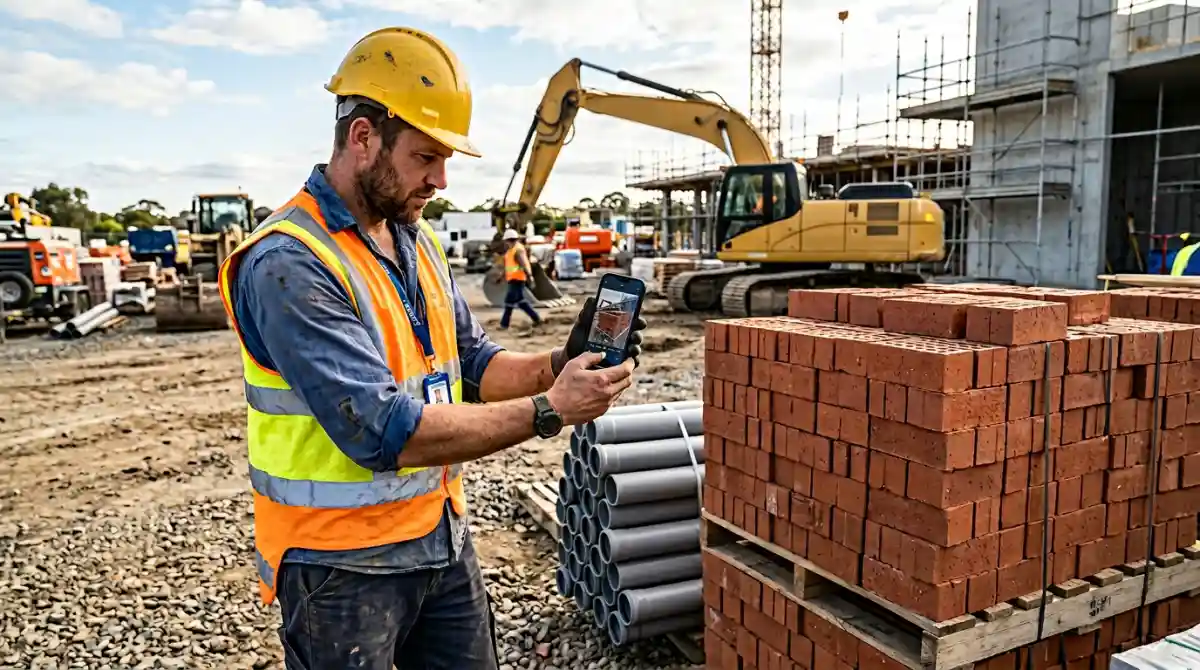
The workflow takes about 10 seconds. A site worker points their phone at a material stack and takes a photo. The image goes to an AI counting model that detects individual items, marks each one with a colored dot, and returns a total count.
The worker reviews the overlay to check for obvious misses or false detections, taps to add or remove points if needed, and logs the verified count. For a stack of 500 pipes, the entire process takes less time than walking to the pile and back.
Doka, the global formwork manufacturer, has built this approach into their operations. Their AI Counting and Identification system has been used over 40,000 times across 50 locations worldwide, counting more than 1.5 million items with accuracy above 98%. The system recognizes over 20 product categories including scaffolding components, beams, props, and formwork panels, even when items are soiled or heavily worn from rental use.
What counts well (and what does not)
Circular cross-sections are highly distinctive. End-on photos of pipe stacks produce some of the highest accuracy rates, routinely above 98%.
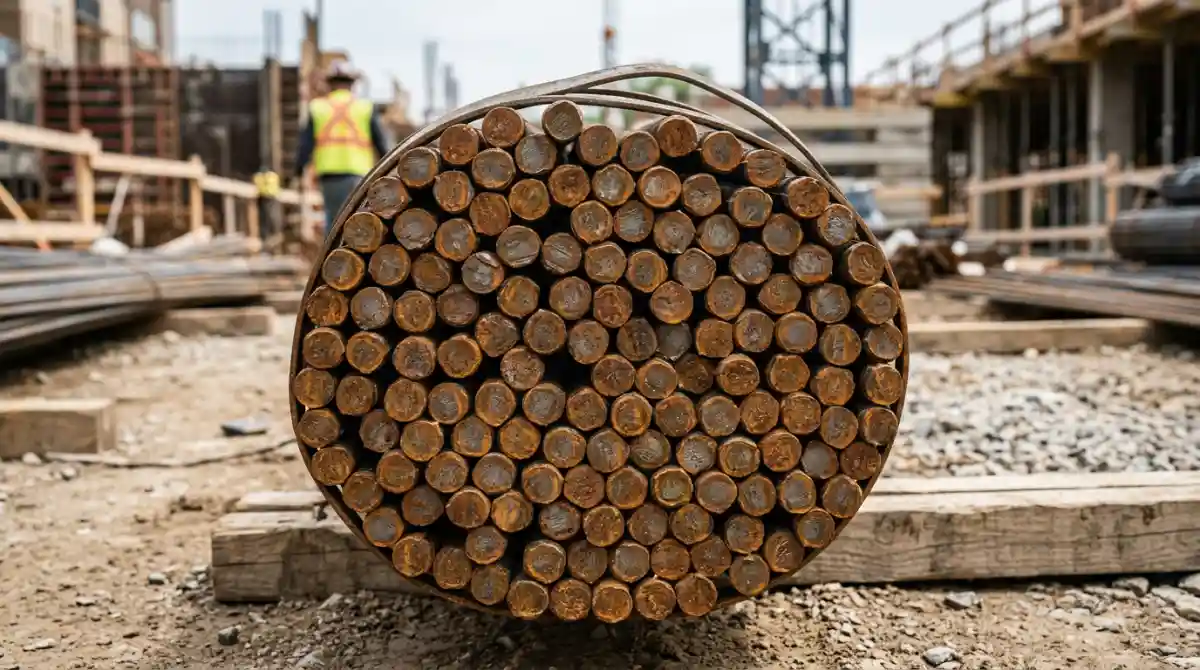
Individual bars are countable when visible at the ends. Bundles photographed from the side, showing each bar's cross-section, count reliably.
Uniform shape and color make bricks ideal for AI counting. Palletized bricks in regular rows are straightforward. Loose piles are harder.
Components like props, frames, and panels are distinct enough for AI to classify and count simultaneously, as Doka's system demonstrates.
Small fasteners, mixed material piles, mud-covered items, and deeply stacked materials where most items are hidden from the camera.
Fitting AI counts into project workflows
AI material counting fits naturally into three construction workflows.
Receiving verification: When a delivery arrives, photograph the materials before unloading. Compare the AI count against the purchase order. Flag discrepancies immediately while the driver is still on site. This eliminates disputed deliveries and catches shortages before materials are scattered across the job.
Daily progress tracking: Photograph remaining material stocks at the end of each day. Track consumption rates against the project schedule. Spot shortages days before they become critical.
Material reconciliation: At project milestones or completion, count remaining materials for return, transfer, or disposal. CountBricks reports that AI-assisted takeoffs cut material estimation time by up to 80%, and users save 8 or more hours per week on estimating tasks.
Tips for better job-site photos
- Separate material types before photographing (do not mix pipes and rebar in one shot)
- Photograph pipe and rebar stacks from the end to show circular cross-sections
- Clean mud or debris from material faces when practical
- Use adequate lighting or shoot during daylight hours
- For tall stacks, photograph each visible layer or take multiple angles
- Keep the camera steady and perpendicular to the material face for best results
The bottom line
Construction material counting has been a manual, error-prone process for as long as there have been construction sites. AI photo counting changes the equation: 98% accuracy, seconds per count, and a photo record that settles delivery disputes on the spot.
The next time a truck drops a load of pipes on your site, take a photo before your foreman starts counting. You will have the answer before he finishes the first row.